Overview
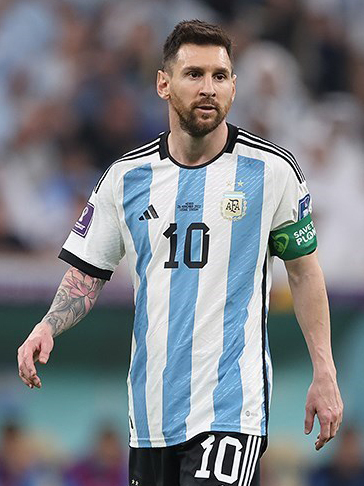
For the first time in twenty years, the Messi-Ronaldo rivalry has two farewell dates pencilled into the same calendar. Cristiano Ronaldo is reported to be lining up a final Portugal appearance against Wales at the Estadio Jose Alvalade on 24 September, while Argentina's federation is working towards a Lionel Messi homecoming match on home soil around 1 October. Neither has been officially confirmed. This is what we know as of 5 August 2026, and what those eight days in autumn would mean for the GOAT debate.
Contents
Ronaldo's Alvalade Exit: The September 24 Report
Messi's Argentina Homecoming: The October 1 Plan
- Why Messi Has Not Retired Yet
What Each Man Leaves Behind in International Football
The Club Season Running Underneath It All
- Two Very Different Restarts
Who Gets the Better Ending?
FAQs
Football has spent the better part of two decades arguing about which of these two men is greater. It is only now, in the strange quiet of an August between seasons, that the argument has acquired an end date. Two of them, in fact, roughly a week apart, and both attached to national teams rather than clubs. Whatever happens next in Miami or Riyadh, the international chapter of this rivalry now looks likely to close inside a single fortnight this autumn.
Ronaldo's Alvalade Exit: The September 24 Report
Portugal's 2026 World Cup ended on 6 July with a 1-0 round-of-16 defeat to Spain, the side that would go on to lift the trophy. Ronaldo, 41, had already said before the tournament that it would be his last. What he has not yet said is when the shirt comes off for good.
Portuguese reports since late July have converged on a date: 24 September, Portugal's UEFA Nations League Group D opener against Wales, staged at the Estadio Jose Alvalade in Lisbon. The symbolism is almost too neat. Alvalade is Sporting CP's ground, the club that took a teenage Ronaldo out of Madeira and into the professional game. It would also be the first match of Jorge Jesus's four-year reign as Portugal head coach, a manager who has publicly said Ronaldo remains part of his plans. No official confirmation has come from the Portuguese federation or the player, so for now this is a well-sourced expectation rather than a fact.
Messi's Argentina Homecoming: The October 1 Plan
Messi's ending is being written more slowly. Argentina lost the World Cup final 1-0 to Spain after extra time at MetLife Stadium, and Messi - 39 years old, and the tournament's second-highest scorer with eight goals and four assists - flew straight to Miami rather than join the squad's homecoming. That absence fuelled a fortnight of retirement speculation.
The plan now taking shape is a celebration rather than an exit. FIFA's newly consolidated autumn window runs from 21 September to 6 October, and the AFA is reported to be organising three exhibition matches inside it: two in China, then a homecoming fixture in Argentina tentatively pencilled in for around 1 October. The stated priority is simple - get Messi back in front of an Argentine crowd while it still means something.
Why Messi Has Not Retired Yet
Reporting from Argentina has been consistent that the World Cup final was not Messi's last cap. He is expected to continue at least into the next Copa America, and the AFA's stated hope reaches as far as 2028. That is the key asymmetry between these two farewells. Ronaldo appears to have chosen a single, fixed, ceremonial date. Messi appears to be leaving the door open and letting the ending find him.
What Each Man Leaves Behind in International Football
Strip out club football and the international ledger is one of the few places the two careers can be compared without collapsing into arguments about league quality. The headline numbers as they stand:
International goals: Ronaldo 146 for Portugal, the all-time men's record. Messi 125 for Argentina, the most by any South American.
World Cups won: Messi one, in 2022. Ronaldo none.
World Cups scored in: Ronaldo six, becoming the first man ever to do it when he found the net in 2026.
Career goals: roughly 974 for Ronaldo against 919 for Messi, a gap of about 55.
Career assists: around 457 for Messi against 307 for Ronaldo, the widest statistical gap in the entire comparison.
Goals per match: Messi 0.79, Ronaldo 0.73.
That spread is exactly why the debate has never resolved. Ronaldo owns the volume records and the international scoring crown. Messi owns the efficiency, the creation numbers and the one trophy Ronaldo will now never win. You can see the full silverware breakdown in the Trophy Cabinet, or weight the criteria yourself in the GOAT Calculator.
The Club Season Running Underneath It All
None of the farewell talk stops the club football, and the two men are in very different states of readiness. Messi is already back: he came off the bench in the 53rd minute on 1 August as Inter Miami drew 2-2 with the Columbus Crew, his first appearance since the World Cup final. Ronaldo is not. Al-Nassr's preseason camp in Lisbon wraps up today, 5 August, and he has spent it on an extended family break.
Two Very Different Restarts
Al-Nassr open their Saudi Pro League title defence against Al-Fateh on 15 August, which leaves Ronaldo somewhere around a week of full training to get sharp. That is a tight runway for a 41-year-old, though he arrives off the back of a season in which he finally landed the domestic league title he had chased since 2023, scoring twice in the 4-1 win over Damac that sealed it. His contract runs to 2027. Messi, by contrast, already has minutes in his legs and an MLS run-in to build towards. One man is winding down a career on his own terms; the other is still being asked to carry a title defence.
Who Gets the Better Ending?
It depends what you think an ending is for. Ronaldo's is theatre in the best sense: a fixed date, a home crowd, the stadium where it all began, and a record of 146 international goals that nobody currently playing looks likely to touch. It is a curtain call designed by someone who has always understood that legacy is partly performance.
Messi's is quieter and, arguably, riskier. There is no announced final cap, no scripted stadium moment, only a friendly in China, a homecoming in Argentina and an open-ended willingness to keep answering the call until the body says otherwise. Ronaldo is choosing his last frame. Messi is refusing to pick one. Twenty years in, that is still the cleanest summary of the difference between them. Tell us which ending you would rather have on the Fan Verdict Wall.
FAQs
Has Cristiano Ronaldo officially retired from international football?
Not yet. He confirmed before the 2026 World Cup that it would be his last tournament, and multiple Portuguese reports point to a final cap against Wales on 24 September at Alvalade, but neither Ronaldo nor the Portuguese federation has confirmed the date.
Is Lionel Messi retiring from Argentina?
There has been no announcement. Reporting from Argentina indicates he is expected to continue past the 2026 World Cup, potentially through the next Copa America, with the AFA hoping he stays involved until 2028.
When is Messi's Argentina homecoming match?
The AFA is reported to be planning three exhibition matches inside the extended 21 September to 6 October window, with a homecoming fixture in Argentina tentatively set for around 1 October. None of the dates are official yet.
Who has more international goals, Messi or Ronaldo?
Ronaldo, comfortably. He has 146 goals for Portugal, the all-time men's international record. Messi has 125 for Argentina, which is the South American record.
When does Ronaldo play again for Al-Nassr?
Al-Nassr begin their Saudi Pro League title defence against Al-Fateh on 15 August 2026. Ronaldo missed the club's Lisbon preseason camp, which concludes on 5 August, leaving him roughly a week of full training beforehand.
Did the 2026 World Cup settle the GOAT debate?
It sharpened the debate rather than settling it. Messi added a runners-up medal plus eight goals and four assists at 39, while Ronaldo became the first man to score at six different World Cups but exited in the last 16. Neither result changed the trophy count most people use as the tiebreaker.